Showing posts with label marketing. Show all posts

Sunday, February 12, 2012

is the iphone really malware free?

friday morning mikko hypponen posted a tweet about the folks behind flexispy changing the look of their site, and i took the opportunity to pose a question to him about iphone malware. you see, flexispy is (or was) a piece of mobile malware that f-secure posted about about 6 years ago. not only that, but there's a version of the software for the iphone, so i found mikko's repeated statement that there was no malware for the iphone to be a little strange in light of the fact that both he and his company have been aware of software that seems to contradict that claim for quite some time.

the resulting discussion with both mikko and his colleague sean sullivan lead in 2 separate directions, so let's look at them in turn. first mikko responded with the following:
@imaguid No malware for iPhones. If you jailbreak your phone: all bets are off. Flexispy runs on jailbroken only.
now to me, this gets to one of the hearts of the matter. when people say there's no malware for the iphone, they're only talking about non-jailbroken phones. the pertinent difference between a normal iphone and a jailbroken iphone is that normal iphones can only install apps from the app store. the app store is a so-called walled garden where all the apps go through a screening process to keep out undesirable programs.

so what people really mean when they say no malware for the iphone is that there's no malware in the app store. this is an important distinction, because the iphone ecosystem (and by extension, the threat landscape) extends beyond the app store. when chris di bona attempted to downplay the threat malware played to android devices by pointing to google's efforts to keep their android marketplace clean, a number of folks were quick to point out that the android ecosystem extended beyond google's android marketplace, so it seems strange that people would forget the same line of reasoning applies to the iphone as well.

one other thing (well, the only other thing, really) that mikko said was:
@imaguid ...and to top it all: we couldn't do anything about iPhone malware anyway, as Apple won't allow Antivirus products to iPhone.
and you know what? why should they allow them when there's apparently "No malware for iPhones"? whether or not there is malware for the iphone, apple doesn't want people to think there is. there is this (rather old) idea that computers can be as easy to use as an appliance (like a toaster). this idea is actually very appealing. it promises computers that just work, computers that don't get malware, computers that are easy and safe and worry free. that promise is part of the secret sauce behind apple's marketing, but if they allowed AV products in then it would dispel the illusion of the appliance computer and apple's products would lose their lustre. it's very convenient, then, that AV vendors are willing to be complicit in apple's marketing by repeating the claim that there's "No malware for iPhones".

but such unqualified claims are, as mikko has revealed, not technically true. it's not that there's no malware for iphones, it's that there's no malware in the iphone app store.

but wait, is that really true? is there no malware in the app store at all? i'm not sure that's true when we've recently been made aware of apps in the app store that collect and send personal information to a remote server without the user's knowledge or consent. but it's about time i turned my attention towards the much more verbose and nuanced discussion that sean sullivan and i had on the subject. perhaps he can shed light on why these personal info stealing apps shouldn't be considered malware. while mikko didn't question the classification of flexispy as malware, sean informed me that f-secure no longer calls it malware.
@imaguid @mikko But they then added an installation interface, and we have since categorized it as riskware.
that's right - in spite of the fact that it is designed and marketed as a tool for spying on other people, it is not classified as spyware or malware because it was given an installation interface - meaning that the attacker has to have physical control of the phone for at least as long as it takes to install an app. now, on the desktop this might be a meaningful mitigating factor, but on mobile devices where physical access is so much easier to achieve? come on...

why exactly that stops it from being malware in general or spyware in particular in the context of mobile device security i still can't fathom, but sean offered up two things by way of explanation. one being a concern over being sued... by malware vendors. this rationale is something i heard from dr. solomon years and years ago, but i have to admit i had hoped that the industry had become less spineless in the interim. i guess that was too much to hope for. google may stand up to the government on behalf of it's users (perhaps not always, and perhaps it doesn't always succeed, but it has tried), but apparently anti-malware vendors only stand up for their users when there's zero risk they'll be challenged.

the other thing he offered was the following definition of spyware from google:
Software that self-installs on a computer, enabling information to be gathered covertly about a person's Internet use, passwords, etc.
apparently it's not enough that the software spies on you in order for it to be called spyware, it has to "self-install" as well. now i'm sure i must be missing something, because this definition seems to exclude anything where the victim is socially engineered into installing the software (it's hard to call it self-installing if the victim is the one installing it). it also seems to exclude anything that utilizes the particular trojan horse case where the software actually does perform the function it claims to, so the payload is additional functionality instead of strictly misrepresented functionality. a game that also steals passwords, a text editor that also sniffs network traffic, webcam software that just happens to send the video stream to a second undisclosed location in addition to the intended recipient - all of these are examples of software that ought to be called spyware but which the victim actually knowingly installs (because the undesirable functionality is unreported) and thus fails to meet the "self-install" criteria. this is precisely the type of situation users of the photo sharing iphone app called path faced.

now, sean also pointed me towards the anti-spyware coalition's risk model description document. i had hoped it would help me to learn more about this "self-install" concept that sean assured me was part of an industry agreed upon standard definition. things didn't turn out that way, since the term "self-install" doesn't appear in that document, but the topic of installation and distribution do figure prominently in the contexts of both risk factors and consent factors. unfortunately this document from 2007 appears once again to be geared to desktop computing rather than mobile computing. that's probably not too surprising considering it's 5 years old now, but it does highlight the age old problem of letting context into the classification process. mobile devices are easier to gain illicit physical access to, as well as being shared more freely (and more frequently) in social circumstances by their owners. the issue of consent at the point of install has far less significance as a risk mitigation for mobile devices. furthermore, the issue of consent at the point of install pretty clearly drops the ball in the case of trojans because it's not necessarily fully informed consent.

as the risk model description document demonstrates, somewhere along the line the industry gave up on basing it's classification system on functional definitions. sean insists that this is a "stricter process" but i think it's more correct to say that it utilizes more criteria than a functional definition system would. utilizing more criteria doesn't always lead to a stricter process because not all criteria are created equal and, at least in the case of the risk model description document, some of those criteria are used to create exceptions (which are generally not the hallmark of a strict process).

one of the last things sean wondered is how could the AV industry possibly use my (supposedly) broader definition(s) and not be accused of FUD. now, aside from the fact that the industry is already accused of FUD (and worse) pretty much regardless of what they do, i think it's important to spell out one of the key differences between a functional definition and the kind of definitions that sean sees in use. definitions that include contextual evaluation are judgements, they engender choice and leave room for agendas. a functional definition has no judgement, it is purely descriptive of the functional capabilities of what is being classified. you can no more be blamed for saying software that spies is spyware than you can for saying water is wet or the sky is blue. there's no silver bullet to make accusations go away, but if you take judgement out of the equation it should render those accusations baseless.

so why is all of this important? because it appears that we've somehow stumbled upon a way in which malware can be classified as "riskware" instead of malware. nobody hears about the riskware classification, nobody cares. they hear "No malware for iPhones" and they shut the rest out because that's all they needed to know (or at least according to traditional notions of malware that should have been all they needed to know). classifying malware as something other than malware seems to be what's enabling people to make the "No malware for iPhones" claim, like some kind of terminological shell game. "No malware for iPhones" makes people think the devices are safe and worry free, but there are risks, and not just for those who jailbreak."No malware for iPhones" is creating a false sense of security and with the revelations that have been made about apple's abject failure to lock down a particular type of personal information and the near ubiquitous exploitation of that failure by app developers, it seems like the stuff of snake-oil.

i tend to think that when people face risks they want to know about them rather than be told there's nothing to worry about, and i tend to think that when those risks come in the form of software that acts against the user's interests, informing the user is the AV industry's job. some people don't want that to happen, they want their own interests to take precedent. if the AV industry allows that to happen through inaction (or worse, facilitates it) then they don't deserve the reputation they have for protecting the user. the industry may not be able to put AV software on iphones yet, but they can certainly do a better job of raising awareness of the risks than going around telling people there's "No malware for iPhones". maybe when public awareness is raised apple will change their ways.
image from secmeme.com

Tuesday, December 27, 2011

the problem with the "like" trade

earlier today randy abrams posted an interesting take on facebook advertising and how misleading the word "like" can be (http://randy-abrams.blogspot.com/2011/12/facebook-misleading-advertising.html). this reminded me of a beef that i've apparently had going back at least as far as may of this year (judging by the timestamp on the screenshot i took).

specifically, randy said the following:
If I have to “like” a page to get the information I want, I don’t have a problem with that
well, with all due respect to randy, i do have a problem with it. randy makes some good points about the way people's pictures get used in facebook ads when they "like" things, but a point he neglected is that forcing users to "like" or otherwise post about something before they can see the content they've been lured with is a popular tactic in facebook scams.

now, i'm not trying to suggest that security companies making use of this marketing methodology are scam artists (though i am tempted to say that all marketing is in some way a scam) but they should be aware that by utilizing this sort of marketing they are effectively endorsing a marketing methodology (developed by facebook) that breeds victims. i don't expect facebook to care about such things, since such trickery is how they make their money, but i certainly expect security companies (especially ones with as strong a leaning towards empowering users as eset) to know better than to go along with facebook's questionable methods and do things like this:
"like"s are not something to be bought from users in exchange for free or otherwise tempting content. they are an endorsement and as such can't be legitimate until after the user has sampled the content. the idea of exploiting illegitimate user endorsements should be recognized as unethical and should be understood to have consequences. by using the sort of techniques that scam artists thrive on, one is basically training people to be victims. i expect better from security companies and i think you should too.

Wednesday, October 26, 2011

marketing bullshit isn't just from marketing departments

so apparently there's a conference going on right now called hacker halted. i heard mention of it a few days ago but paid little attention because frankly there are just too many security conferences to keep track of. what piqued my interest yesterday, however, was a retelling of something george kurtz is supposed to have said in one of the keynotes at the conference - specifically, he's quoted as saying the following (from @InfosecurityMag's tweet)
industry has to move beyond signatures and customers need to demand this from the vendors. We need to change and adapt
now i have to admit i had no idea who george kurtz was. fact of the matter is i have no idea who most people in the security field are (so if you're wondering why i don't follow you back on twitter or add you to a circle on google+, that's a strong contender for the reason why). i thought he was just some crank talking about things he didn't really know much about (more common than you might think, unfortunately) because the AV industry hasn't been relying exclusively on signatures for quite a long time.

imagine my surprise to discover george kurtz is actually the chief technology officer at mcafee, of all places. would such a highly titled representative of an AV company really say such a bizarre thing? well, if symantec's CEO can claim the virus problem is solved, then i guess so, but it still begs the question "what was he thinking?"

thankfully rik ferguson managed to tease a little something extra out of george on twitter
George Kurtz woke up in 2008 today "industry has to move beyond signatures". Helloooo? McFly?
@rik_ferguson maybe you missed the part about the hardware assisted security. Opps.. forgot you don't really have that at Trend.
and there we have it; the quote that people are fawning over (or scratching their heads over) was actually marketing bullshit. oh sure, on the the surface it looks like an AV big wig eating crow and admitting that his company isn't doing a good enough job and needs to improve; just the kind of frank confession we're all waiting for the AV industry to make. but with this added wrinkle we see that's not it at all. george's company supposedly already has improved and it's everybody else who still has the problem. mcafee has this licked, mcafee is the solution, buy mcafee.

no, he didn't actually say 'mcafee is the solution, buy mcafee' (to the best of my knowledge), but that is the reality distortion he's setting up - and distorting reality that way is the hallmark of marketing. all that remains is to publicly declare that deepsafe (their hardware assist technology that they announced over a month ago) is how you "move beyond signatures" and the marketing message will be complete with reality suitably distorted to mcafee's benefit and everyone else's detriment.

now you might be thinking to yourself that this can't be true, that such a highly placed and well respected security expert would never stoop to such base gamesmanship. the fact is that not only do most public faces of the industry practice marketing regularly in the process of representing their respective companies, but most high profile speakers rise above the rest not strictly by merit but by effectively selling themselves and building their personal brands - and if they have to stretch the truth or fuzz the facts or distort reality to make their message more palatable to the masses and give themselves more cache and influence, then so be it.

and the unfortunate consequence of this is that, due to the fact that the rest of us rely on such speakers to inform us, much of what the majority of us know about the the subject matter in question is actually somewhat wrong in subtle (or not so subtle) ways. reality distortion interferes with the formation of accurate mental models and that in turn interferes with people's ability to deal with the parts of the real world those models are supposed to represent. one of the things i've tried to impress on people in the past is that they need to stop listening to marketing, but i realize now that i don't have an easy method for them to recognize it in the first place. at least not without developing much more thorough knowledge than they currently have, and to do so without relying on apparent authorities on the subject in question is no easy task.

no, marketing bullshit isn't restricted to the glossy pages of a magazine or the cover of a box or an ad on tv. it's not just the product of marketing departments. it's woven into the very fabric of what we think we know, and it's hurting us.

Monday, January 17, 2011

how do you get to the top?

so how do you get to the top? well, if you're an anti-virus company it stands to reason you get there through technical excellence (yes, i can hear you snickering from here). of course if you have technical excellence then it also stands to reason that your people know what it is they're talking about when they go and say something about malware in public.

specifically, what i and many other people expect is that people working for the #1 anti-virus company to at the very least know the difference between viral and non-viral malware. those kinds of basics seem like they should be prerequisites for achieving technical excellence in the anti-virus industry.

apparently that is expecting too much, since some people (in the industry, no less) are still using the term 'virus' as the umbrella term instead of the more accurate term 'malware'. i'm not sure exactly when it happened, but at some point i started hearing more terminology misuse from media sources within the industry than i hear from general media sources in the world at large.

to say that cancels out any willingness i might have had to suspend disbelief about the question of technical excellence is an understatement.

now one explanation i could entertain is that this is actually part of a very clever plot to keep the public confused and disoriented. governments long ago figured out that it was easier to control their subjects if they kept them stupid and uneducated. it doesn't seem unreasonable to suppose that corporations might make use of similar tactics. the foundation upon which greater understanding and ultimately greater self-reliance is built on is an accurate and consistent body of knowledge about the topic at hand. authoritatively using terms where they don't belong unquestionably undermines the process of developing that body of knowledge. it is precisely the type of tactic i would expect if corporations were trying to keep the masses easily manipulated.

that being said, i'm still prone to give the benefit of the doubt. never attribute to malice that which can easily be explained by incompetence. of course, since that reflects poorly on the possibility of technical excellence, that still leaves open the question of how one can get to the top and stay there.

without technical excellence being the driving force to keep the top players on top, we eliminate the possibility that the system is a meritocracy - or at least if there is a meritocracy, it's not the merits of the technology that are important but rather the merits of the efforts to manipulate people into thinking their technology has the most merit. that's called marketing. in essence, it's the best manipulator, not the best technology, that wins.

(though a system that rewards manipulation seems like it should eventually evolve into one that actively tries to keep people stupid in order to manipulate them more easily)

Friday, September 10, 2010

scareware and human frailty

about two ago the folks at trend published a blog post about the persistence of fake av that really got under my skin. it was around the time of my birthday, which is ironic because the following quote really takes the cake:
Online, however, FAKEAV is a good example of a social engineering “success story.” By leveraging human weakness, FAKEAV effectively utilizes social engineering techniques such as blackhat search engine optimization (SEO) to trick users.
if there's one time a vendor should not be laying the blame for users being fooled on "human weakness" it's when talking about scareware.

scareware generally presents itself to the user in very much the same way legitimate security products do. vendors should consider that maybe scareware purveyors can be so effective while imitating legitimate security vendors is because of how close legitimate security vendors' messaging is to being an outright scam in and of itself.
use our software. we'll protect you.
worry free computing
we take care of X so you don't have to
you need our solution
the virus problem is solved
etc.

while those wearing vendor-coloured glasses may see the average user's propensity to believe the messaging put forward by illegitimate security vendors as nothing out of the ordinary (and certainly nothing to do with them themselves), i see over 2 decades of marketing and media training the populace to be as unquestioning, as unthinking as a pack of lemmings in a mindless frenzy when it comes to what security vendors say (whether they're really security vendors or not).

it's not human frailty at work here, it's bad guys figuring out how to exploit the one thing that security vendors are loathe to change: their marketing and business practices. legitimate (or so-called legitimate) security vendors made the market for scareware. the scareware purveyors are just showing up to the party, putting their hands out, and having a slice of the pie handed to them on a silver platter.

if the security industry really wants to do something about scareware purveyors, they should stop acting so much like them and start fostering skepticism amongst the populace - not only skepticism in what others say but also in what you yourselves say. stop creating an environment where scareware flourishes. stop doing their market development for them and actually start dismantling that blind-trust based market in spite of the fact that it's paid you so well in the past.

the bad guys are milking your cash cow, vendors. it's time to stop treating customers like cattle. it's time for you to lead rational critical thinkers rather than herd livestock. it's time for you to stop being part of the problem.

Sunday, December 14, 2008

does av really suck that badly?

while looking through my rss feeds today i saw this comment rich mogull posted about a week ago (don't ask why it took so long to reach my reader, i don't know)...

primarily it's his observation about malware, anti-malware, and the mac platform and community, but he ends the comment much more generally with this:
To be honest, I think desktop AV sucks in general and isn't nearly as effective as everyone would like us to think.

this is probably a common enough sentiment among the more technically savvy crowd... i wouldn't go so far as to say this is part of the anti-av movement, but rather a consequence of the mismatched expectations people have with regards to anti-virus software and the persistent mischaracterization of av as being solely about virus scanners...

i can understand where the opinion is coming from - if you look just at scanners, and more to the point if you look just at what populist media reports about scanners then the image you get is of something that fails a lot... but here's the main problem with this line of thinking (besides the issue of what av is, which i think i covered adequately before) - no preventative measure is an island complete unto itself...

as i mentioned in my post about the blacklist value proposition, the primary benefit of a scanner is to take care of the exceptions that aren't covered by other measures... scanners have never, ever been the sole preventative measure in play, they've always been complementing something else... even when the only technological measure present was a scanner, there were still procedural measures, there was still common sense, there was still (in the distant past at least) the relative disconnected nature of the computing ecosystem, etc... judging a scanner's effectiveness in isolation as though it were supposed to take care of the entire problem all by itself is like judging how well table salt satisfies your appetite...

the problem is that people think the scanner is supposed to take care of the threat all by itself, and they think that because av marketing departments have been feeding them that line of rubbish for something like two decades now and they aren't really taking many steps to correct the imbalance in the image they're creating and the mismatched expectations they're giving the public... this is why i often frown on marketing, why i've accused those who overuse the concept of protection as snake-oil peddlars, and why i cringe when someone calls a set of security tools a solution...

the problem isn't the technology, the problem is what people understand (or fail to understand) about the technology, and by extension the thing that causes the misunderstanding... as mark linton points out, there is a definite false sense of security being fostered here, and as cd-man suggests in pointing to that same post, that false sense of security is causing harm - possibly even more harm than a scanner can make up for... av companies need to wake up and realize that by allowing their own marketing departments to subtly lie to the public they're going to be shooting themselves in the foot in the long run... by operating in bad faith they are increasingly losing the faith of consumers - and not only will that accelerate when the idea that av sucks makes it into mainstream public consciousness, but it is also very hard to win back once lost...

but back to rich's opinion - i don't think he's entirely wrong, av isn't nearly as good as it's often made out to be, but rich and probably a lot of other people out there are being so profoundly affected by the reality-distortion field put up by av marketing that when they finally start to see a glimmer of reality through a thin spot in the fog bank they see a stark contrast between it and the marketing message and start rejecting everything in the marketing message, even though the best lies are those that are hidden among truths, and come to equally imbalanced conclusions... the opinion is one that smacks of not seeing the whole picture... as i keep saying, what most people call av (the scanner) should be part of a larger whole, not abstracted out on it's own.. further, it's not everyone who wants you to believe av is so good, it's really just marketing (stop listening to marketing; seriously don't even bother rejecting what they're saying, just don't let them affect your thinking at all) and the corporate big-wigs who care more about market share than they do about actually contributing to their customers security and well being (ahem john thompson ahem)... there are plenty of honest, ethical, technical people in the anti-malware industry trying to spread a more balanced message, but they may not be as easy to find as the pitch on the outside of the product's packaging...

Saturday, September 27, 2008

from the 'what were they thinking?' file

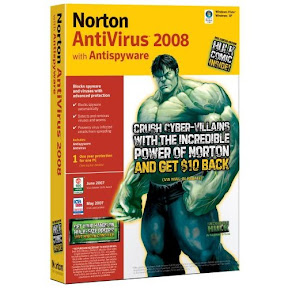
using the (incredible?) hulk as an av spokesperson:


i actually saw a very small version of this in a print ad some time ago and i thought it was hilarious at the time but i couldn't find it anywhere online so that i could share it... graham just reminded me of it and better still pointed to a site where one might find it and low and behold here it is...

and why did i think it was hilarious? well, the hulk is certainly powerful, no one can deny that, but the hulk also has one major weakness - he's a dumbass... and that's who symantec chose to represent their product... well i guess it's better than a picture of peter norton who once famously said that computer viruses were an urban legend like alligators in the sewers of new york... yes, that's right, the same peter norton that norton anti-virus is named after...